📸 Completed Concrete Projects with Photos!
🚧 FAQ for Concrete
Concrete Materials
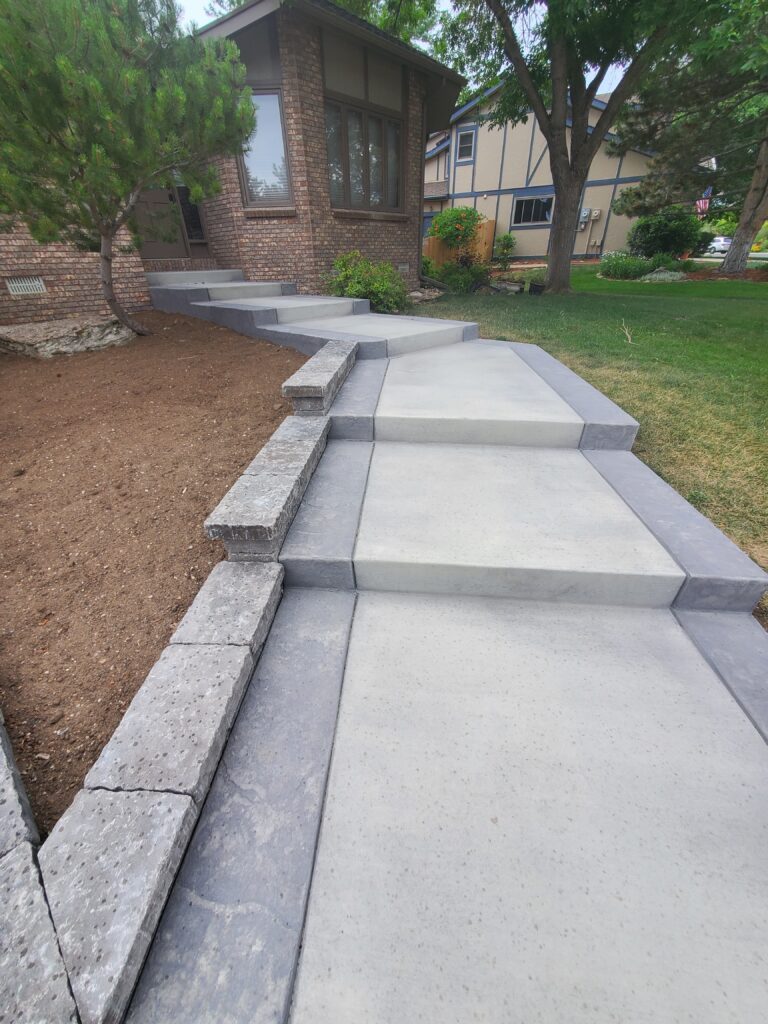
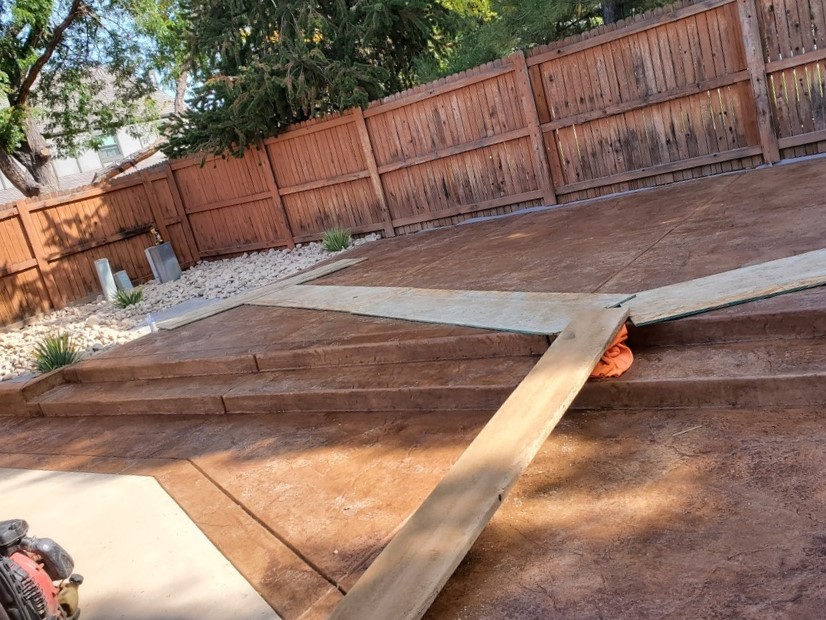
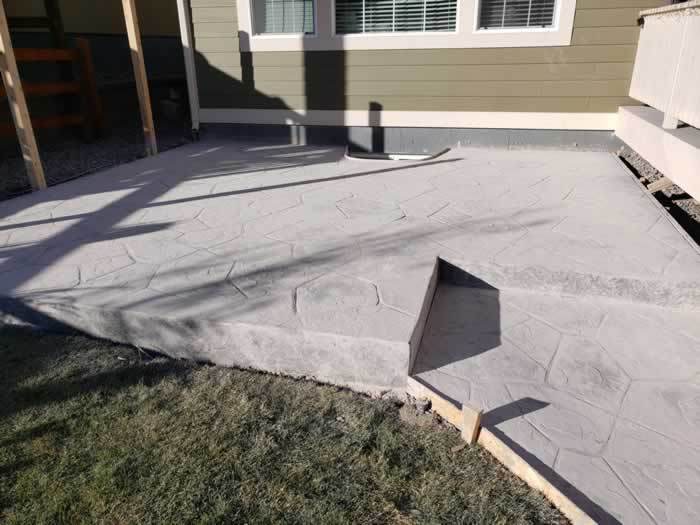
There are many different styles to consider when deciding on concrete. When it comes to colors there are many shades of grey as well as earthy tones available. Then once color is chosen you need to pick a finish. There is a simple brushed finish as well as many different styles of stamps that can give the look of pavers.
Construction Process
The first step is preparing the basework. Underneath the concrete there should always be at least 4″ of compacted road base to ensure a strong steady foundation that is resistant to settling. This means that we excavate 7″ to create space for the base and then we pour 3″ deep. Even if the base is prepared perfectly, concrete can still crack over time because it is poured in large sections that can move during the freeze/thaw cycle of winter.
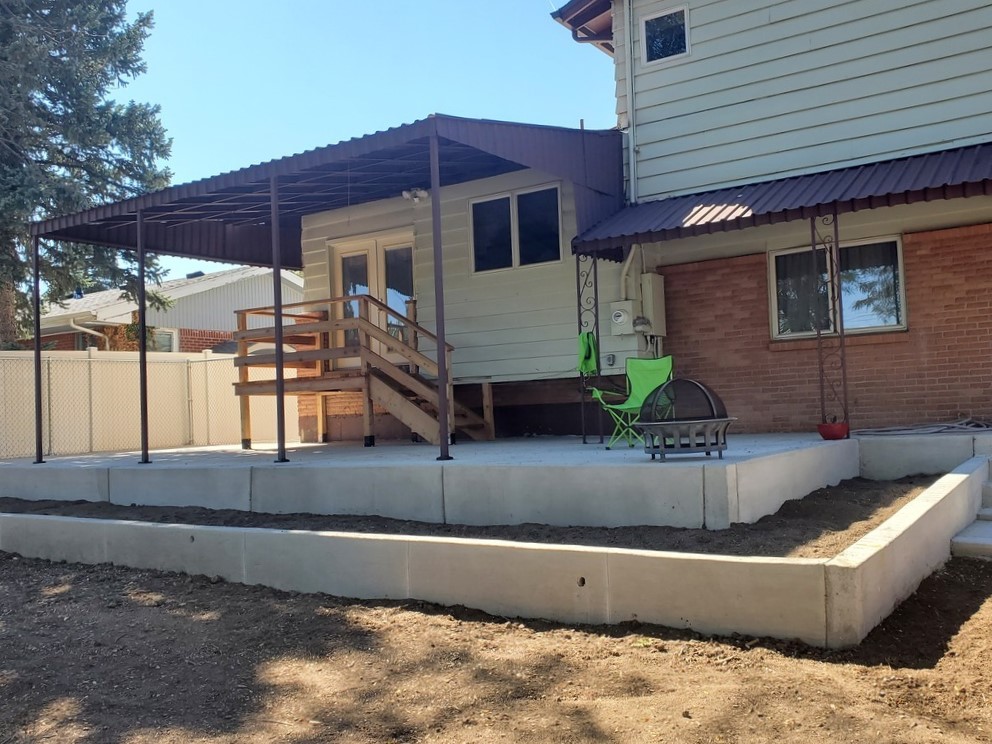
What about Raised Patios?
As you can see in this picture, not all patios or walkways can be set at ground level. In this case, we use a special technique called thickened edge. The way this works is that we build up a raised section of compacted Road base and when the concrete is poured it is formed so that it has a 3″ layer on top as well as on the vertical sides of the patio. This is also how we pour steps.
What do I need to know about Caring for my new Concrete?
First and foremost: No ice melt within the first year. Using ice melt on your new concrete will cause the top layer to flake and ruin the finish. It is even recommended to wait two years, but the first year is the most necessary.
Concrete FAQ
What is stamped concrete?
Stamped concrete is standard concrete that’s textured and colored to resemble stone, brick, slate, or wood. It delivers a high‑end look with lower cost and maintenance.
Should we plan early for concrete jobs?
Yes. Concrete projects in Denver should be scheduled early due to weather windows, permitting, and contractor availability. Spring and summer fill up quickly.
Here in Denver, can we pour concrete in winter?
Yes, concrete can be poured in winter using heated blankets, curing additives, and other cold‑weather techniques. Professional handling is essential to prevent freezing.
How long does concrete take to cure?
Concrete gains most of its strength within 7 days and fully cures in about 28 days. Foot traffic is usually fine after 24–48 hours; vehicles should wait at least a week.
Can concrete be used with pavers?
Yes. Concrete pairs well with pavers for borders, accents, or mixed‑material patios and walkways.
What’s the difference between concrete and cement?
Cement is one ingredient in concrete. Concrete is a mixture of cement, sand, gravel, and water — strong enough for patios, driveways, and walkways.
How long will a concrete driveway or patio last?
With proper installation and maintenance, concrete in Denver typically lasts 25–40 years. Sealing and good drainage help extend its lifespan.
Does Denver’s freeze–thaw cycle affect concrete?
Yes. Denver’s climate can cause cracking or surface flaking. Air‑entrained mixes, proper base prep, and regular sealing help protect your concrete.
How often should concrete be sealed?
Most outdoor concrete should be sealed every 2–3 years. High‑traffic or decorative surfaces may benefit from more frequent sealing.
Can concrete crack?
All concrete can develop small cracks over time. Proper installation, control joints, and reinforcement help keep cracks minimal.
What colors and finishes are available?
Options include broom finish, smooth finish, stamped patterns, exposed aggregate, staining, and custom coloring.
Is concrete slippery when wet?
Broom‑finished concrete provides good traction. Decorative surfaces can be made slip‑resistant with texture or additives.
How thick should a concrete driveway or patio be?
Patios are typically 4 inches thick. Driveways are usually 4–6 inches depending on vehicle load, with rebar or mesh reinforcement recommended.
What maintenance does concrete require?
Maintenance includes cleaning, sealing every few years, avoiding harsh de‑icers, and using plastic shovels for snow removal.
Can you replace part of a damaged slab instead of the whole thing?
Small sections can sometimes be replaced, but color matching older concrete can be difficult. Full replacement may look better for large or visible areas.
